



AI & Wellness5 min read
AI Wellness
The AI Wellness Source Check: Follow the Claim Before the Advice
AI can make a wellness answer sound certain. A quick source check helps you separate a useful idea from an unsupported claim.
MyCalAgent TeamOctober 19, 20264 min read
Explore with AICompare perspectives across leading AI assistants.
ChatGPTClaudeGoogle AI ModePerplexityA convincing answer still needs a trail
You ask an AI tool a question about a wellness habit. The answer arrives in seconds, neatly organized and confidently phrased. It might even include a study. That presentation feels useful—but polish alone tells you nothing about whether the source exists, whether it supports the claim, or whether the advice fits your life.
As AI becomes part of everyday wellness, a small new skill matters: tracing an important claim back to its source. The goal is not to turn every meal into a research project. It is to know when to pause, what to check, and when a person with relevant training belongs in the conversation.
1. Open
Does the link lead to a real, relevant source?
2. Compare
Does the source actually support the specific claim?
3. Contextualize
Who was studied, and does the claim overstate the evidence?
Why an attractive citation can mislead
The World Health Organization warns that large multimodal models used in health contexts can produce inaccurate, incomplete, biased, or false statements. WHO also describes automation bias: people may overlook errors or delegate difficult decisions too readily to a model. NIST's generative AI risk profile describes “confabulation,” where a system can confidently produce erroneous content. WHO’s guidance also notes that models can invent references. These are risks of the technology categories discussed in those publications; they are not measurements of MyCalAgent's performance.
A real citation is a starting point, not a stamp of certainty. A study can be accurately named and still be misrepresented: perhaps it examined a different population, measured a different outcome, or found an association that does not establish cause. Guidance from a public-health agency and a small preliminary study also answer different kinds of questions.
A practical source check
When a claim could change an important health decision, open the underlying source yourself. Look for the organization or authors, date, population, outcome, and limitations. Check whether the article or abstract says what the AI answer says. If a link is broken or the source cannot be found, treat the claim as unverified rather than filling in the gap with confidence.
| If the answer says | Check the source for | A grounded response |
|---|---|---|
| “Research proves this works.” | Study design, outcome, population, and limitations | Describe what was observed and what remains uncertain. |
| “This is right for everyone.” | Who the guidance applies to and any stated exceptions | Avoid assuming general guidance fits every individual. |
| “Your log shows why you felt this way.” | Whether the record can establish a cause | Treat a pattern as a question, not an explanation. |
For broad wellness guidance, start with a relevant public-health agency or a major medical institution. For a research claim, follow the link to the original paper or its PubMed record and notice whether the result is preliminary. A single paper rarely resolves a question by itself. When the evidence is hard to interpret, a qualified professional can help put it in context.
Bring that habit into your wellness tools
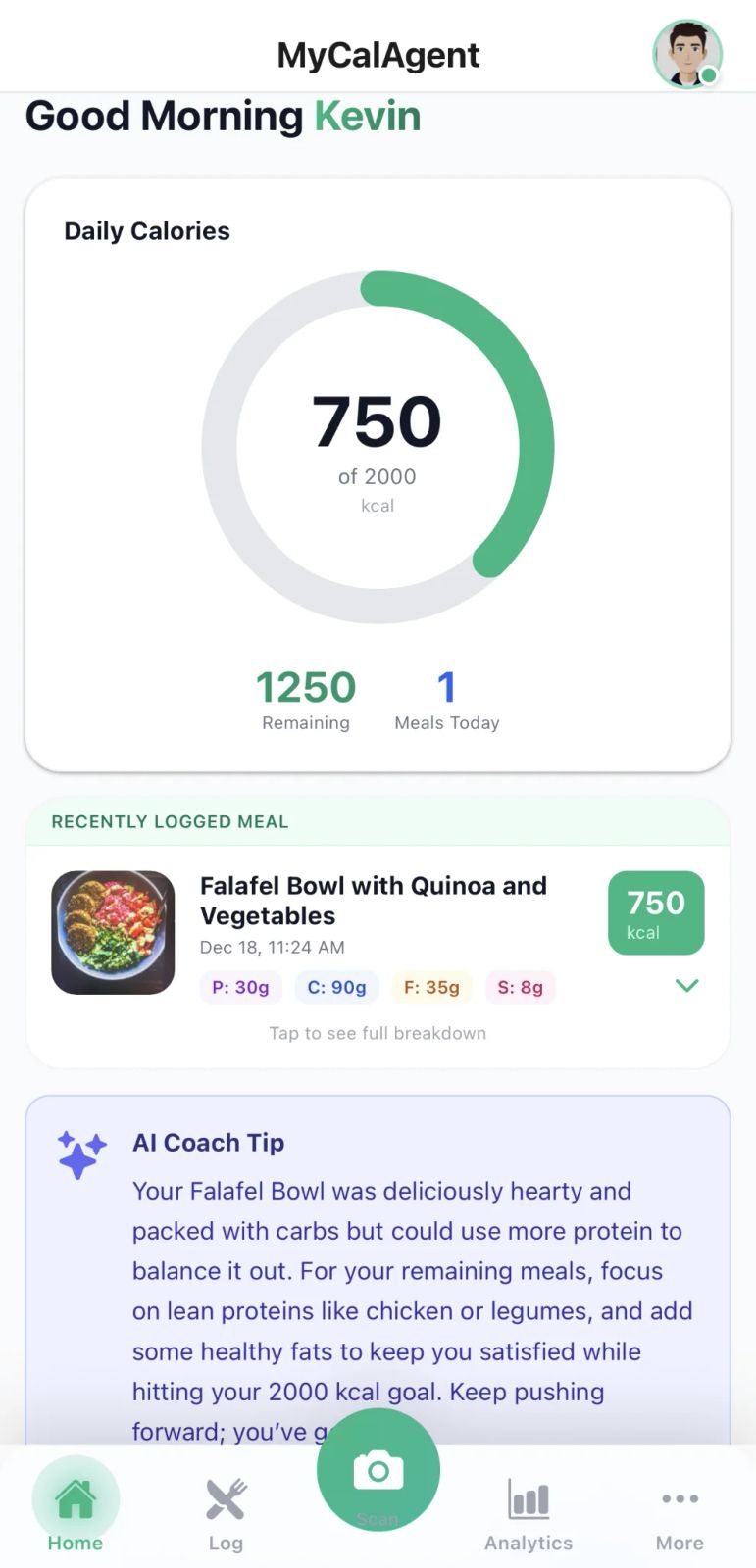
MyCalAgent is designed to bring meal and wellness tracking into one picture, with AI-assisted estimates and observations. Its own AI disclaimer says results are estimates, pattern recognition is probabilistic, and outputs do not account for individual clinical factors. Review your entries and question an interpretation that seems too certain. Your logs can help you remember what happened; they cannot validate an external claim or establish a medical cause.
For example, if a summary suggests that a change in your routine aligns with a different energy pattern, check the underlying entries for missing days or errors. Then ask what other explanations might fit. That is a prompt for reflection, not evidence that a particular food or routine caused an outcome.
Choose a useful level of scrutiny
A low-stakes idea, such as trying a different way to organize a grocery list, may need little investigation. A claim about symptoms, medication, pregnancy, a chronic condition, or a restrictive eating plan deserves a different response: verify the source and seek advice tailored to your situation. If tracking feels distressing or fuels rigid eating, it is reasonable to step back and speak with a qualified professional.
The most valuable AI habit may be the pause between reading an answer and acting on it. A clear source trail gives curiosity somewhere solid to go—and keeps your judgment in the loop.
Wellness and AI disclaimer: This article is educational and is not medical advice. MyCalAgent is a wellness awareness product, not a medical device or a substitute for a doctor, registered dietitian, therapist, or other qualified professional. AI outputs can be wrong or incomplete. For symptoms, medication, pregnancy, chronic conditions, eating-disorder concerns, or other medical questions, consult an appropriate healthcare professional.
Sources
Key Takeaway
AI can make a wellness answer sound certain. A quick source check helps you separate a useful idea from an unsupported claim.
What This Means For MyCalAgent Users
MyCalAgent's AI pattern recognition analyzes your logged data across meals, hydration, sleep, and habits. After 7–14 days of consistent tracking, it surfaces the recurring patterns most relevant to your daily wellbeing.
Frequently Asked Questions
AI wellnesssource checkingresponsible AIdigital healthwellness intelligence
Disclaimer: This article is for informational purposes only. MyCalAgent does not provide medical advice, diagnosis, or treatment. The content reflects general wellness observations and research summaries. Always consult a qualified healthcare professional before making changes to your diet, health routine, or medical care.
Continue the Conversation
Explore with AI
Compare perspectives across leading AI assistants — ChatGPT, Claude, Google AI, and Perplexity.
Explore with AICompare perspectives across leading AI assistants.
ChatGPTClaudeGoogle AI ModePerplexityOriginal source: WHO; NIST; MyCalAgent. Content independently reviewed and adapted by MyCalAgent editorial team.