
AI wellness insights.
Your meals and routines, considered together. A starting point for reflection, with room for uncertainty.
Explore an observationFrom everyday details to reflection.
Three ways to think about AI's role, with your review and judgment at the center.
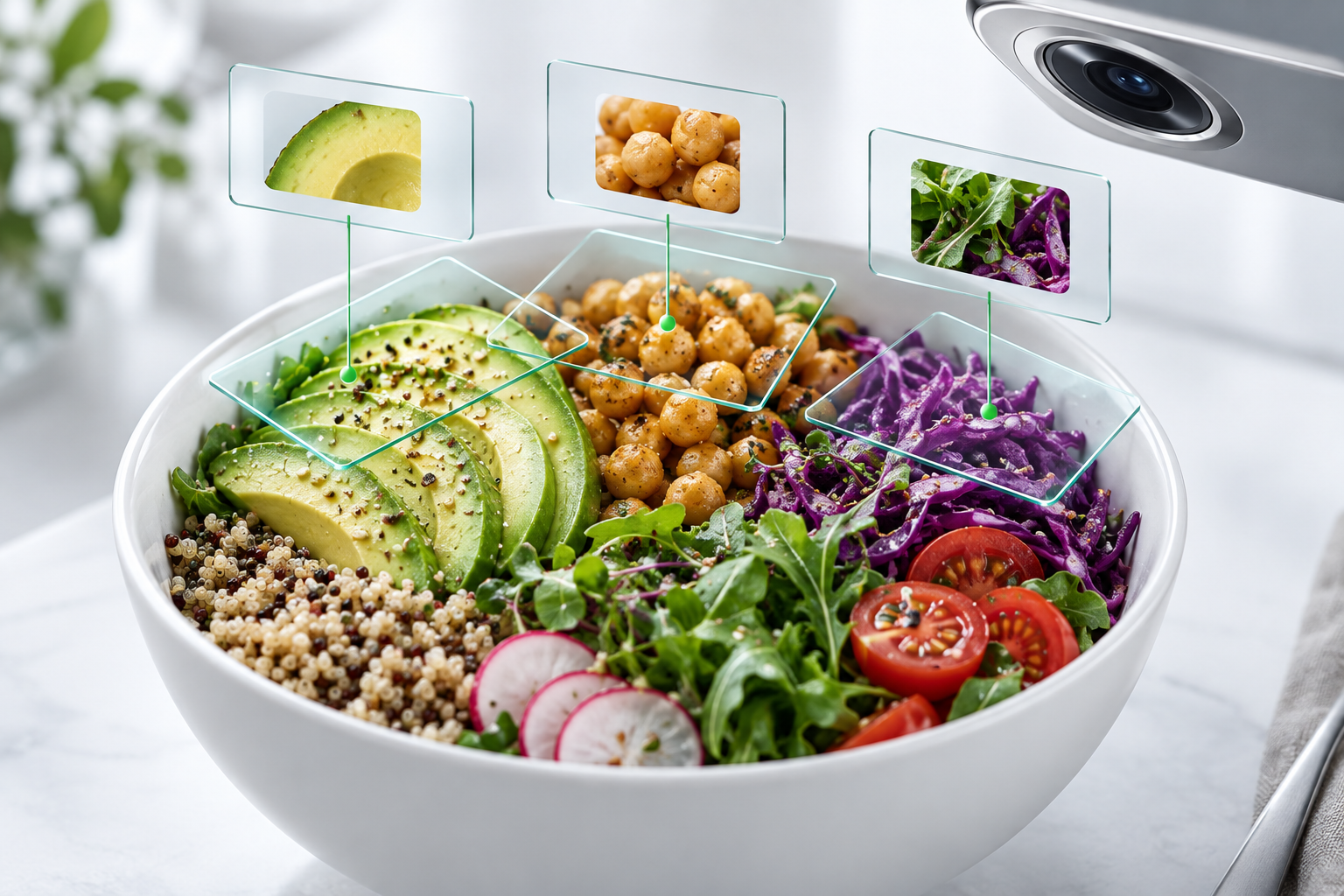
Recognize the details.
AI assists with identifying foods and estimating nutrition. Your corrections add details a photo cannot reveal.
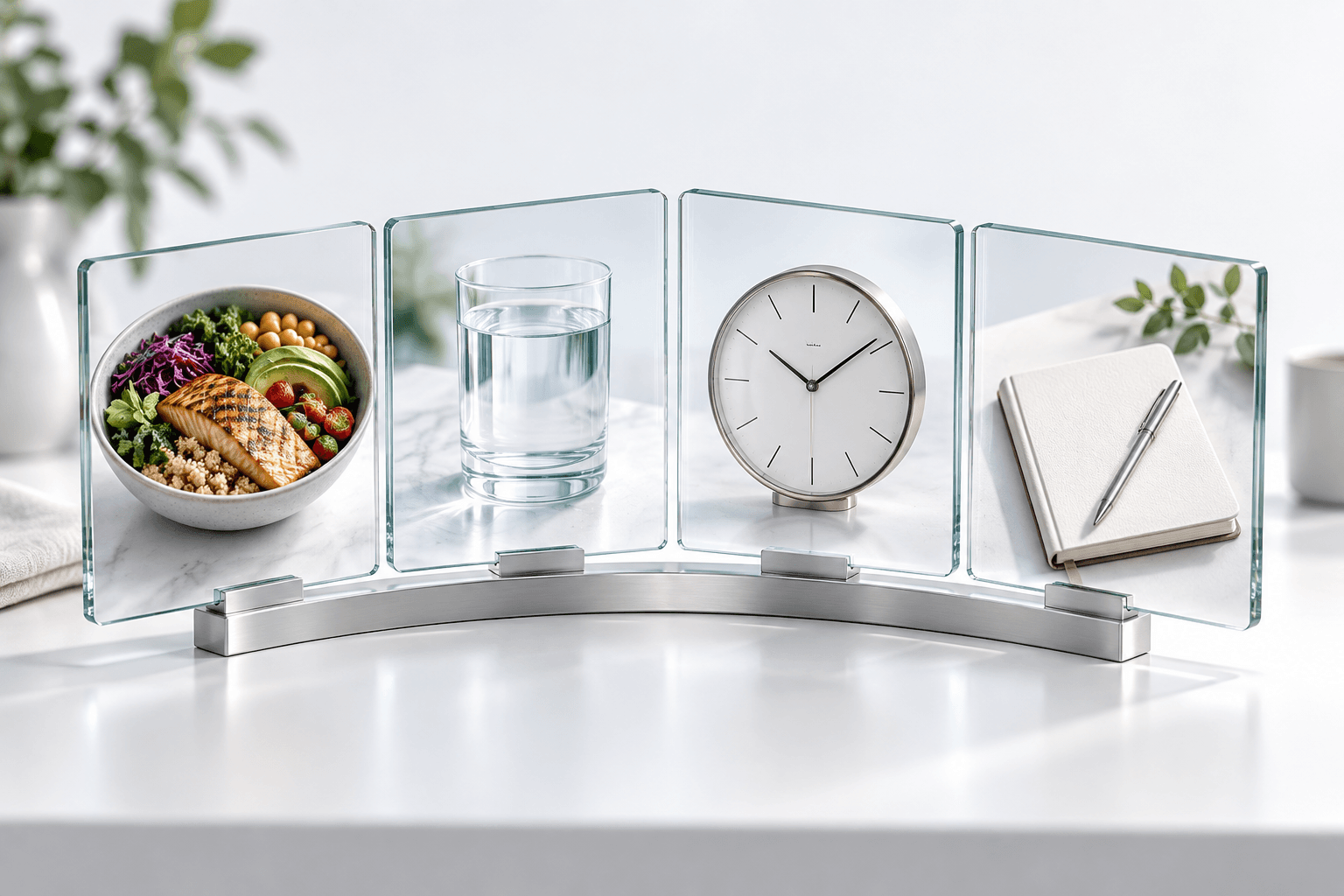
Bring context together.
Meal logs, water entries, schedules, and check-ins contribute different perspectives on a recorded day.
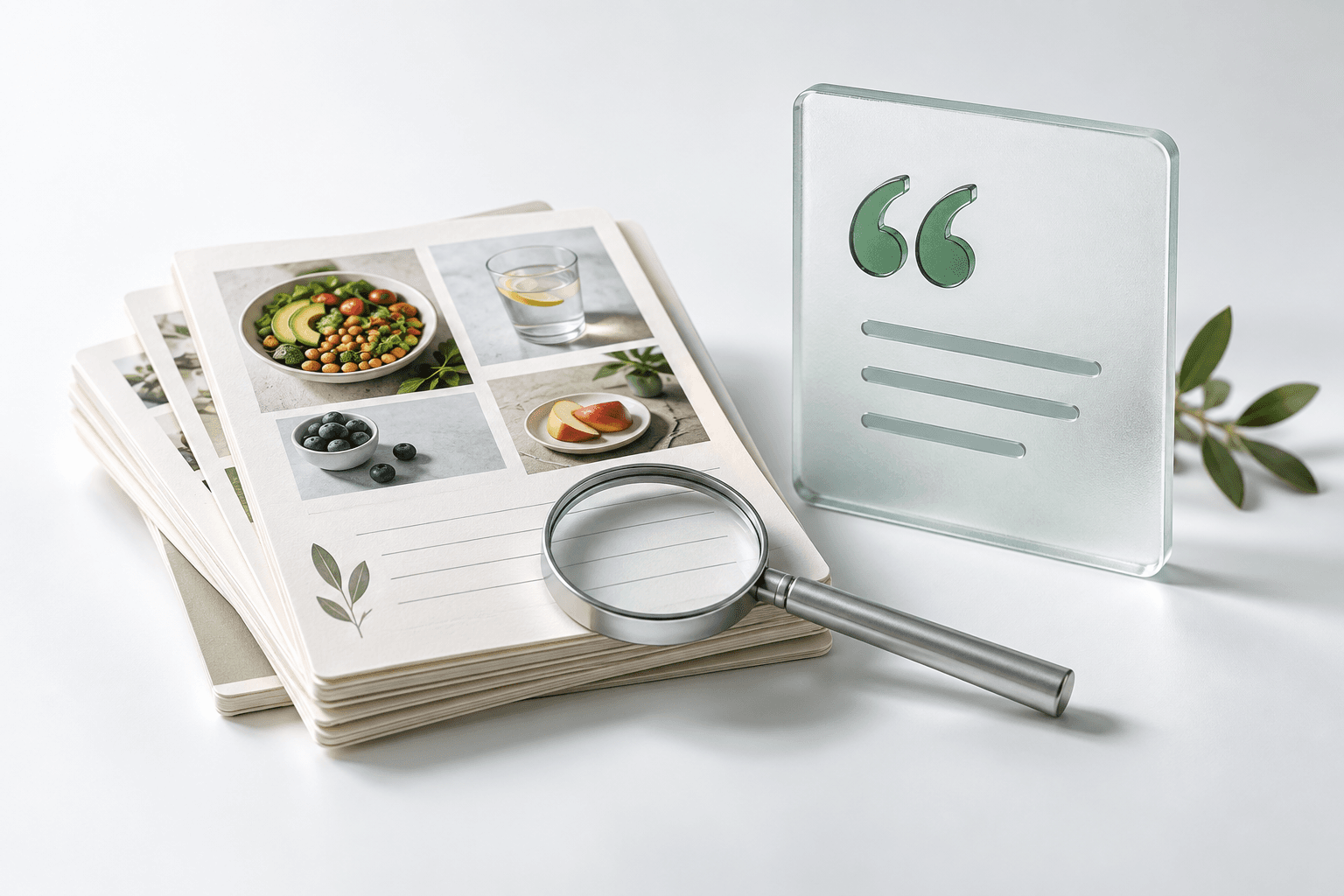
Make room to reflect.
Plain-language observations can prompt questions. They cannot establish causes or replace your own judgment.
A little context. A different perspective.
Explore examples of how everyday records might be discussed, including what those records cannot tell you.
Lunch was logged later on the days with lower afternoon energy check-ins.
Meal times and self-reported energy could be compared across the same logged days.
This does not show that lunch timing caused a change in energy. Sleep, workload, missing entries, and other factors may matter.
Examples explain the type of observation being discussed. They are not real user results, predictions, or a guarantee that an insight will be available.
The detail behind the bigger picture.
Meal photos become reviewed logs. Water entries, eating windows, and personal check-ins add context over time.
An occasional entry is only a small part of a day. Missing records, changing routines, and imperfect estimates all affect what can be observed.
How MyCalAgent works
Clarity includes what we don't know.
What observations can offer
- A summary of recorded habits and routines.
- A way to notice repetition and variation.
- Questions to reflect on alongside your own experience.
What they cannot establish
- That one food or habit caused an outcome.
- A diagnosis, treatment, or medication decision.
- A guaranteed result, or a complete picture of your health.
A little more clarity.
What is an AI wellness insight?
It is an informational observation about your logged routines. AI can look for associations across meals, water, schedules, and personal check-ins. An observation does not establish what caused a change in how you feel.
How do meal photos become part of an insight?
AI estimates foods, portions, and nutrition from a meal photo. You review and correct the entry before saving it. Those saved logs can then add context to observations over time.
Does more logging guarantee better insights?
No. Consistency can add context, but an observation still depends on data quality, completeness, and the limits of the analysis. Some records may not support a meaningful pattern.
What about caffeine, alcohol, and other habits?
Beverage and habit entries can provide additional context when recorded. A summary cannot account for everything happening in your life or determine which habit caused an outcome.
Are these examples my results?
No. The examples on this page are illustrative. They do not use your personal data, represent measured user outcomes, or guarantee the availability of any particular insight.
Can I use an insight for a medical decision?
No. MyCalAgent is not a medical device or healthcare provider. AI estimates and observations may be inaccurate or incomplete. Consult a qualified healthcare professional for medical decisions.
Curiosity, with perspective.
Read about our approach to evidence and the limits of AI before treating any observation as an answer.
MyCalAgent is for general wellness and informational use, not medical advice, diagnosis, or treatment. AI estimates and observations may be inaccurate or incomplete. Patterns do not establish cause and effect.
AI DisclaimerTerms of ServicePrivacy Policy