



AI & Wellness4 min read
AI & Wellness
A Photo Is a Starting Point: How to Review AI Nutrition Estimates
AI meal photos can make logging easier, but estimates are not exact. Learn a review-first way to use MyCalAgent with more context and less pressure.
MyCalAgent TeamNovember 18, 20265 min readLast Updated: November 18, 2026
Explore with AICompare perspectives across leading AI assistants.
ChatGPTClaudeGoogle AI ModePerplexityA photo can lower the effort. It cannot remove uncertainty.
Taking a meal photo can be a helpful first step when a full food log feels like too much. An image can make it easier to remember what you ate, notice a pattern later, and begin a nutrition estimate without typing every ingredient from scratch.
But a photo is not a lab measurement. It may not show a cooking method, every ingredient, an amount of oil or sauce, a recipe change, or the portion that was actually eaten. That is not a reason to abandon the tool. It is a reason to use AI estimates as a starting point for review—not a verdict about a meal or a body.
Photo
A quick visual record of what was in view.
Estimate
An AI-generated best guess that can be incomplete.
Review
Your chance to edit details and decide what is useful.
Why “estimate” is the honest word
Research on image-based dietary assessment shows real promise, especially for recognizing visible foods and reducing the burden of recording. It also shows why precision claims need humility. A systematic review of AI-based image assessment found wide variation across food-image databases and error reporting, concluding that the tools still need development before they are used as stand-alone dietary assessment methods in research or clinical practice.
A newer evaluation of meal photographs found that food identification could be strong while nutrient and portion estimates were much less reliable for medium and large meals. These limits are unsurprising: a camera cannot reliably see every ingredient, recipe, or quantity. The useful takeaway is not that photos are “bad data.” It is that context and correction improve how a photo can serve you.
What MyCalAgent is designed to make easier
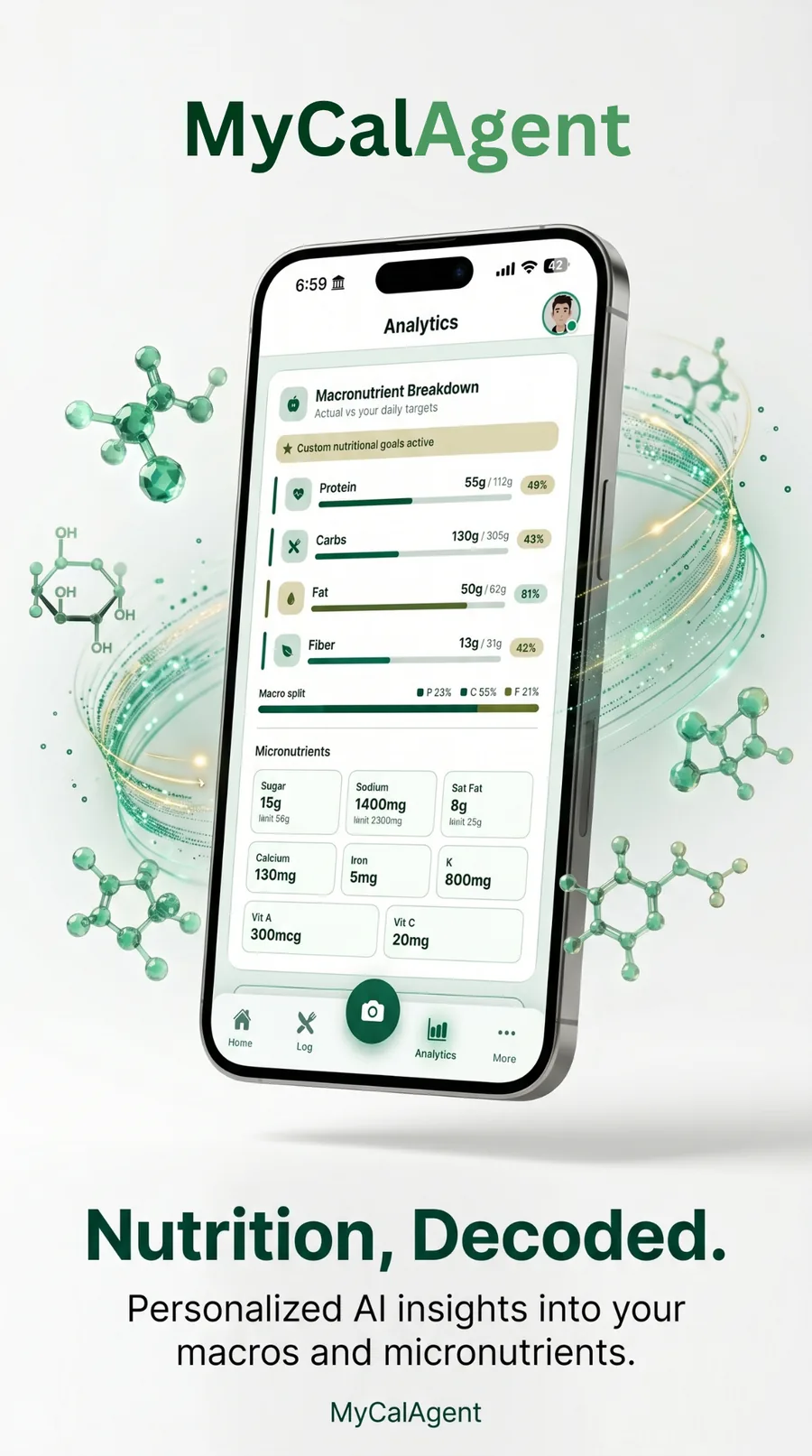
MyCalAgent lets you log meals with AI photo analysis or manual input, then review the estimated foods and nutrition details before treating the entry as part of your wellness record. You can use the result to capture a quick memory of a meal, make a correction when you know more than the image shows, or keep the log simple when that is all you need.
That review step matters. AI may identify visible items and produce approximate nutrition values, but you remain the person with the relevant context: the recipe, portion, substitutions, leftovers, and whether tracking this detail is useful today. MyCalAgent is for general wellness awareness, not clinical measurement or medical nutrition therapy.
A practical review flow
| When you log | What AI can help with | What you can add or change |
|---|---|---|
| A clear, simple meal | A quick first-pass list of visible foods and approximate nutrition. | Confirm the meal or edit anything that looks off. |
| A shared or restaurant meal | A useful visual memory and a rough place to begin. | Add recipe, portion, sauce, drink, or leftovers context if it matters to you. |
| A day you want less detail | A lower-friction way to preserve a general record. | Keep it light, use a manual note, or skip logging without turning it into a score. |
Four details images often miss
- Preparation: Oils, sauces, dressings, and cooking methods may not be visible.
- Portion: Plate size, camera angle, and hidden layers can make amounts hard to infer.
- Ingredients: A soup, casserole, smoothie, or mixed bowl can contain details a photo does not reveal.
- What changed: Shared dishes, seconds, leftovers, and substitutions live outside a single frame.
When one of those details matters to your goal, edit the entry or use manual input. When it does not, a rough record may still be enough for a broader reflection on routines, timing, or variety. The right amount of detail is the amount that supports awareness without making food feel like an audit.
Use patterns carefully
MyCalAgent can bring meals into the same personal record as hydration, caffeine, fasting, and other optional wellness inputs. That can make it easier to notice questions worth exploring: “Do I tend to skip lunch on meeting-heavy days?” or “Which breakfasts feel easiest to repeat?” It cannot establish why a pattern happened, diagnose a problem, or tell you what your body needs.
Keep the language of a log proportional to what it contains. “In my entries this week” is more honest than “my body always.” “This estimate may be incomplete” is more useful than pretending certainty. And if a meal estimate looks wrong, correction is a feature—not a failure.
Make the record work for you
A sustainable nutrition log is not the most detailed one. It is the one you can return to with enough kindness and context to learn something useful. Use photos to reduce friction. Use edits to bring in what the image missed. Use patterns as prompts for reflection, not instructions.
For symptoms, medications, pregnancy, chronic conditions, eating-disorder concerns, or decisions that require individualized nutrition care, speak with a qualified healthcare professional or registered dietitian. MyCalAgent’s AI estimates are general-wellness tools and may be inaccurate or incomplete.
Sources and further reading
- PubMed: AI-Based Digital Image Dietary Assessment Methods Compared to Humans and Ground Truth—Systematic Review
- PubMed: An Evaluation of ChatGPT for Nutrient Content Estimation From Meal Photographs
- PubMed: Review of the Validity and Feasibility of Image-Assisted Methods for Dietary Assessment
- MyCalAgent: AI Disclaimer
Wellness and AI disclaimer: This article is educational and for general wellness awareness only. MyCalAgent is not a medical device and does not provide medical advice, diagnosis, or treatment. AI meal estimates can be inaccurate or incomplete and do not establish cause and effect. For symptoms, medications, pregnancy, chronic conditions, eating-disorder concerns, or individualized nutrition questions, consult a qualified healthcare professional.
Key Takeaway
AI meal photos can make logging easier, but estimates are not exact. Learn a review-first way to use MyCalAgent with more context and less pressure.
What This Means For MyCalAgent Users
Use MyCalAgent to apply these insights to your own wellness data. The AI surfaces personal patterns after 7–14 days of consistent tracking — helping you understand what works for your body specifically.
Frequently Asked Questions
AI meal analysisnutrition trackingfood loggingwellness technologyresponsible AI
Disclaimer: This article is for informational purposes only. MyCalAgent does not provide medical advice, diagnosis, or treatment. The content reflects general wellness observations and research summaries. Always consult a qualified healthcare professional before making changes to your diet, health routine, or medical care.
Continue the Conversation
Explore with AI
Compare perspectives across leading AI assistants — ChatGPT, Claude, Google AI, and Perplexity.
Explore with AICompare perspectives across leading AI assistants.
ChatGPTClaudeGoogle AI ModePerplexityOriginal source: PubMed; MyCalAgent. Content independently reviewed and adapted by MyCalAgent editorial team.