



AI Wellness4 min read
Nutrition & Lifestyle
The Reset Is Not a Restart: A Calmer Way to Use AI Wellness Logs
A missed wellness log is not a restart. Learn a calmer AI-aware way to return to meals, movement, and context without chasing a perfect streak.
MyCalAgent TeamOctober 7, 20264 min readLast Updated: October 7, 2026
Explore with AICompare perspectives across leading AI assistants.
ChatGPTClaudeGoogle AI ModePerplexityA missed log does not erase the context you already have
Wellness apps often inherit an unhelpful idea from productivity software: if a streak breaks, the system should make the break feel loud. But food, movement, hydration, sleep, work, travel, family meals, and low-energy days do not arrive in a perfect sequence. A gap in a log is not a failed dataset. It is simply a gap.
That distinction matters. A useful wellness practice should make it easier to return, not make returning feel like an apology. The next log can be a fresh observation—not a demand to reconstruct every unrecorded meal or “make up” for a day.
Notice
Name the next moment you want to remember.
Log lightly
Capture the minimum context that feels useful.
Reflect later
Look for patterns with curiosity, not a score.
What the evidence actually supports
Self-monitoring and feedback are common elements of digital behavior-change research, but they are not magic. A systematic review and meta-analysis of 26 remotely delivered dietary interventions found a small average improvement in dietary behavior, alongside substantial variation between studies and risk-of-bias concerns. A later review of feedback in self-monitoring interventions likewise concluded that more research is needed to identify the most effective ways to generate and present feedback.
The practical takeaway is modest and useful: a log may support reflection and behavior change for some people, but no streak, dashboard, or AI observation can guarantee an outcome. The details matter—what someone wants to notice, what fits their life, and whether the tool stays proportionate.
Design the return, not the perfect record
Instead of promising to “get back on track,” try a smaller reset: choose one next entry and one question it could help you revisit. The Centers for Disease Control and Prevention notes that people eat in many settings and that planning can support food choices. A reset can be a form of planning too—without turning ordinary life into a compliance test.
| When the log feels interrupted | A calmer next entry | What to leave out |
|---|---|---|
| A busy week changed your meal routine | Log the next meal, plus timing if it matters to you | A retroactive audit of every missed day |
| Travel or a celebration changed the usual pattern | Add a simple note: travel, restaurant, shared meal, or late dinner | Judgment about whether the day was “good” |
| The app suggests a pattern you do not recognize | Review the entries and ask what context may be missing | Assuming the pattern explains how you feel or what you need |
Where AI can help—and where it should pause
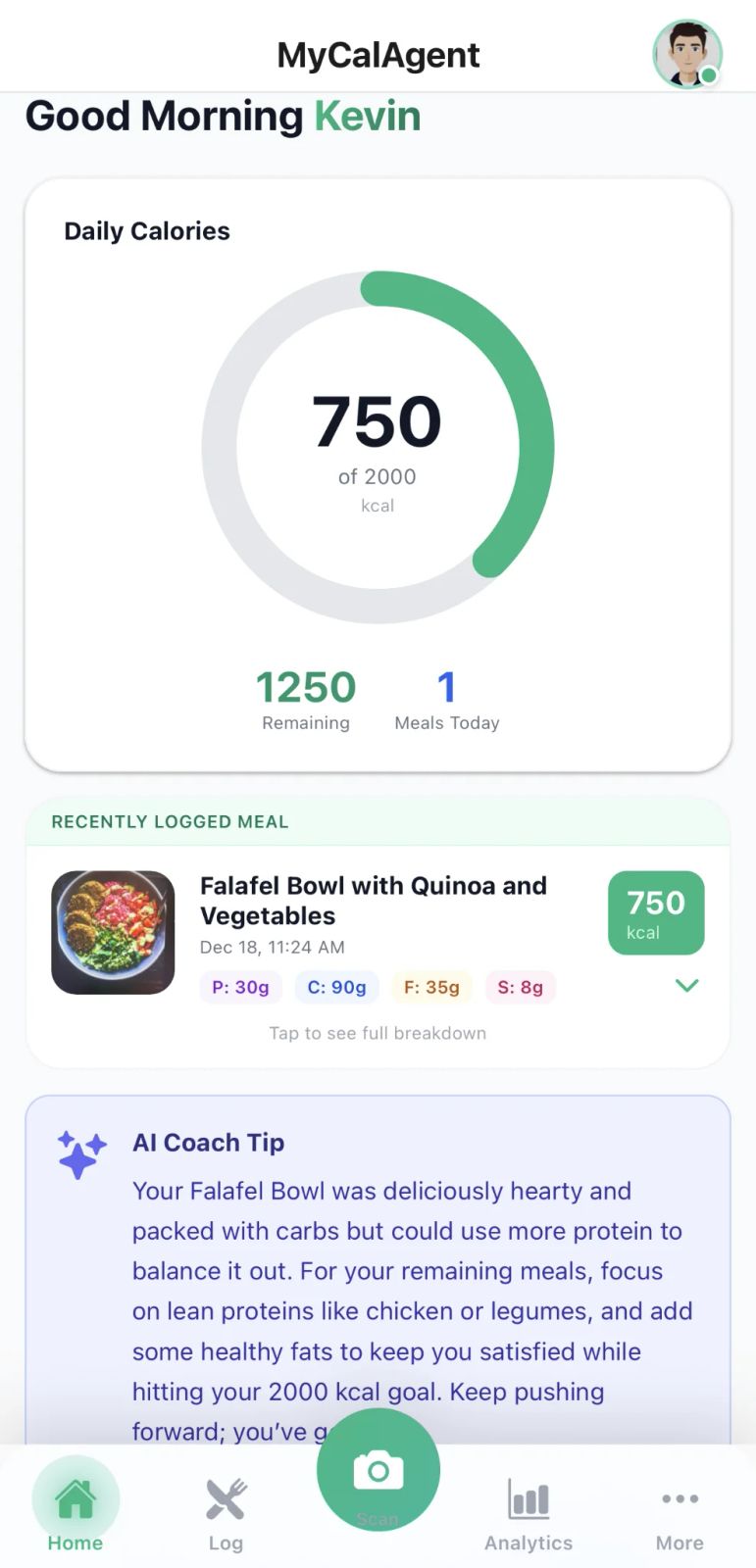
MyCalAgent can lower the blank-page friction: an AI meal photo estimate can start a meal log, while hydration, caffeine, fasting, and other wellness entries can add context you choose to capture. The useful role for AI is to make the next entry easier and help organize observations over time.
It should not turn a gap into a verdict. AI estimates can be incomplete or wrong; photo-based nutrition estimates can vary with portions, preparation, ingredients, and image quality. Likewise, a pattern in logged information is not proof of cause and effect. You remain the person who decides whether an observation fits your lived context—and whether it is worth acting on.
A three-minute reset for a real day
- Choose the next moment. Start with the meal, drink, walk, or check-in that is actually in front of you.
- Keep one detail that gives it context. That could be time of day, a shared meal, a workout, or a note that you were travelling.
- Skip the performance review. The entry is there to help you notice, not to prove consistency.
This is especially important when wellness tracking feels emotionally charged. A log is not a scorecard, and it should never be used to justify guilt, restriction, compensation, or a medical conclusion. If logging is increasing distress, anxiety around food, or eating-disorder concerns, pause and speak with a qualified healthcare or mental-health professional.
Make the data human-sized
The best return to a wellness app is rarely dramatic. It is one honest entry, captured in a way you can sustain. Over time, that record may offer something more valuable than a perfect streak: a little more context about the routines you actually live.
Wellness and AI disclaimer: This article is for general wellness and informational purposes only. MyCalAgent is not a medical device, healthcare provider, or substitute for medical, dietetic, mental-health, or training advice. AI estimates and observations may be inaccurate or incomplete and do not diagnose, treat, or establish cause and effect. Consult a qualified professional for personal medical or nutrition decisions.
Sources and further reading
- Teasdale et al. (2018): Systematic review and meta-analysis of remotely delivered interventions using self-monitoring or tailored feedback to change dietary behavior
- Krukowski et al. (2024): Feedback generation and presentation in self-monitoring—systematic review and meta-analysis
- CDC: How to Have Healthier Meals and Snacks
- MyCalAgent: AI Meal Analysis
- MyCalAgent: AI Disclaimer
- MyCalAgent: Editorial Policy
Key Takeaway
A missed wellness log is not a restart. Learn a calmer AI-aware way to return to meals, movement, and context without chasing a perfect streak.
What This Means For MyCalAgent Users
Use MyCalAgent to apply these insights to your own wellness data. The AI surfaces personal patterns after 7–14 days of consistent tracking — helping you understand what works for your body specifically.
Frequently Asked Questions
wellness habitsself-monitoringAI wellnessnutrition behaviordigital health
Disclaimer: This article is for informational purposes only. MyCalAgent does not provide medical advice, diagnosis, or treatment. The content reflects general wellness observations and research summaries. Always consult a qualified healthcare professional before making changes to your diet, health routine, or medical care.
Continue the Conversation
Explore with AI
Compare perspectives across leading AI assistants — ChatGPT, Claude, Google AI, and Perplexity.
Explore with AICompare perspectives across leading AI assistants.
ChatGPTClaudeGoogle AI ModePerplexityOriginal source: CDC; PubMed; MyCalAgent. Content independently reviewed and adapted by MyCalAgent editorial team.