



AI Wellness4 min read
AI Wellness
After the Workout: A Better Question for Your Meal Log
A workout-day food log can hold useful context without turning meals, movement, or AI estimates into a prescription.
MyCalAgent TeamSeptember 30, 20264 min readLast Updated: September 30, 2026
Editorially ReviewedAI-AssistedSource: U.S. HHS Office of Disease Prevention and Health Promotion; PubMed; MyCalAgent
Explore with AICompare perspectives across leading AI assistants.
ChatGPTClaudeGoogle AI ModePerplexityA workout can make a food log feel urgent: What should I eat now? For a general-wellness app, the more useful first question is usually smaller: What would I like to remember about this session and the meal around it?
That shift makes room for real life. The person who grabbed a sandwich after a lunchtime walk, the person who ate dinner before an evening class, and the person who had no appetite after a long day may all have useful context to log. None needs a verdict from an app.
1. Baseline
Log the activity and the meal as they happened.
2. Context
Notice timing, routine, and how the day felt.
3. Next question
Choose one small, practical thing to try—or none.
Movement guidance is a compass, not a daily grade
U.S. physical activity guidance encourages adults to aim for 150 to 300 minutes of moderate-intensity aerobic activity a week, plus muscle-strengthening activity on 2 or more days. Those are population-level guidelines, not a prescription for every body or every week. Ability, access, injury history, disability, pregnancy, medical conditions, and personal priorities all shape what movement looks like.
A meal log does not need to turn those guidelines into a compliance score. It can help keep a simple record of what supported your routine. On one day, that may be breakfast before a walk. On another, it may be a meal after a strength session. On a third, it may be choosing rest.
What an AI-assisted log can do well
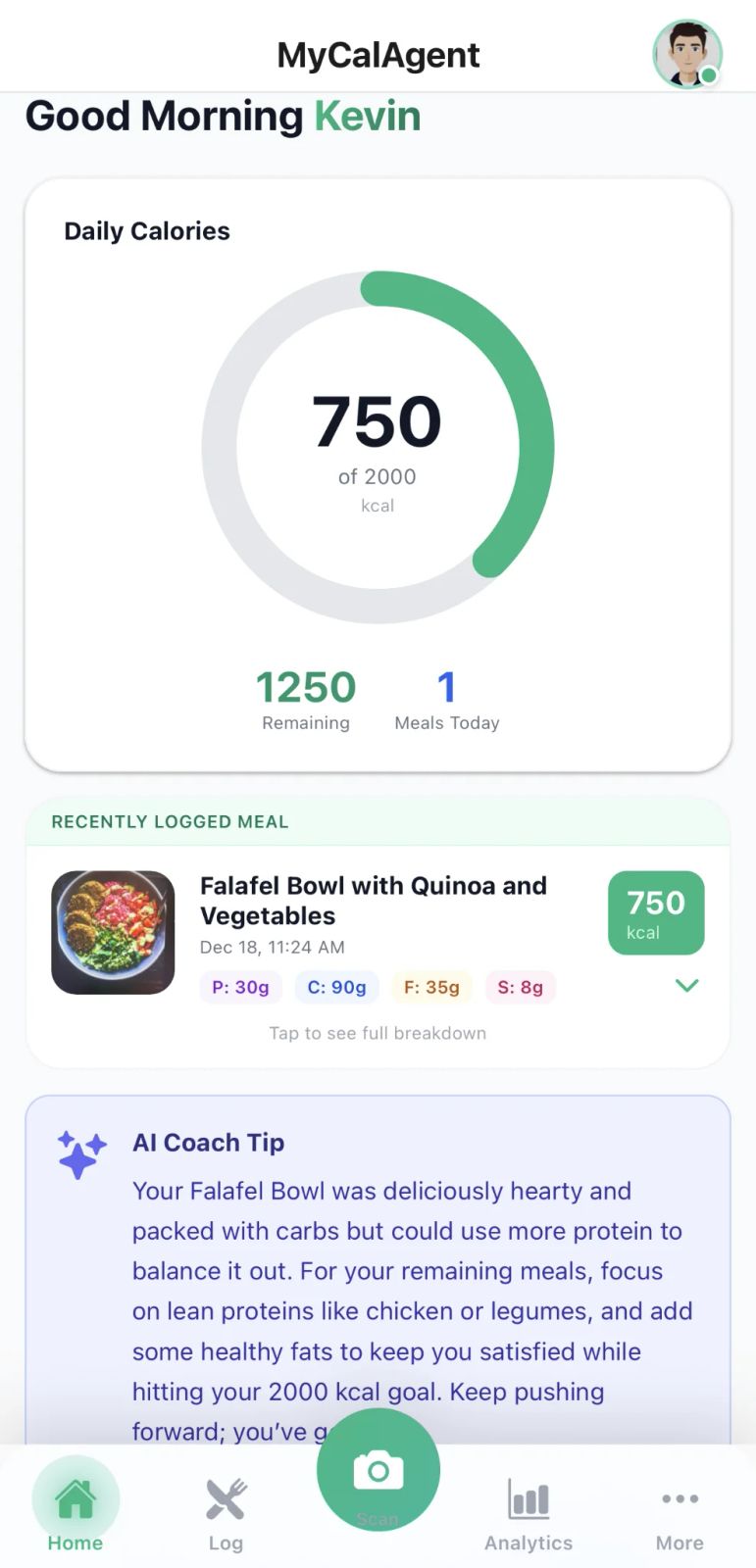
MyCalAgent can make the capture step lighter: photo-based meal analysis can provide an estimate you can review, while optional activity and wellness context can sit beside meals, hydration, fasting, and daily habits. Over time, an AI-supported view may help you notice recurring timing or logging patterns.
That is a very different job from calculating a personalized recovery protocol. Meal photos do not capture every ingredient, portion, preparation method, or reason you ate. Workout data does not reveal medical history, energy availability, training load, or what a qualified sports dietitian would assess. AI estimates and patterns are incomplete by design. Treat them as notes for reflection, not instructions.
A four-field workout-day log
You do not need a perfect dashboard. Try a small record that answers only what you may want to revisit later.
| Field | A neutral example | What it can support |
|---|---|---|
| Movement | “Thirty-minute walk” or “strength class” | A simple timeline, not a performance rating. |
| Meal | A photo, a quick edit, or a brief note | A record of what was practical that day. |
| Timing | Before, after, or simply “later that evening” | A prompt to notice routine patterns. |
| Optional context | “Busy day,” “travel,” or “felt fine” | A reminder that one data point never tells the whole story. |
Feedback helps most when it stays specific
A 2024 systematic review of self-monitoring interventions found that feedback can support physical-activity interventions, while also noting major differences across studies and limits in the evidence. That is a useful design lesson: feedback can be helpful, but there is no universal best format and no reason to pretend an algorithm has the final answer.
In practice, useful feedback sounds like: “You logged walks on three lunch breaks this week. Were those days easier to sustain with a packed snack?” It does not sound like: “Your body needs this exact meal after exercise.” The first respects uncertainty and autonomy. The second overreaches.
Make the next step ordinary
If a pattern catches your attention, choose a small experiment that fits your life. Bring a familiar snack on a longer outing. Put a glass of water near the door. Keep logging meals without changing anything for a week. Or decide the data is not useful right now and leave it alone.
For people managing a medical condition, pregnancy, medications, injuries, disordered-eating risk, or a performance-focused training plan, food and exercise decisions deserve individualized professional support. An app cannot safely tailor those decisions from a partial log.
Wellness and AI disclaimer: This article is for general wellness and educational purposes only. MyCalAgent is not a medical device, healthcare provider, or substitute for a physician, registered dietitian, therapist, or certified trainer. AI meal estimates and pattern observations may be inaccurate or incomplete and do not diagnose, treat, or establish cause and effect. Consult a qualified professional for symptoms, injuries, pregnancy, medications, chronic conditions, eating-disorder concerns, or individualized nutrition or exercise decisions.
The point is context, not control
Fitness and nutrition do not become more meaningful when every meal is judged against a workout. They become more useful when your record helps you recall the ordinary conditions around both. MyCalAgent is built to help make that context visible—without claiming to know what your body needs from a single screen.
Sources and further reading
- U.S. HHS Office of Disease Prevention and Health Promotion: Physical Activity Guidelines for Americans
- Krukowski et al. (2024): Feedback and self-monitoring systematic review and meta-analysis
- MyCalAgent: AI Meal Analysis
- MyCalAgent: Apple Health integration
- MyCalAgent: AI Disclaimer
- MyCalAgent: Editorial Policy
Key Takeaway
A workout-day food log can hold useful context without turning meals, movement, or AI estimates into a prescription.
What This Means For MyCalAgent Users
MyCalAgent's AI pattern recognition analyzes your logged data across meals, hydration, sleep, and habits. After 7–14 days of consistent tracking, it surfaces the recurring patterns most relevant to your daily wellbeing.
Frequently Asked Questions
fitness nutritionworkout meal logAI wellnessself-monitoringwellness patterns
Disclaimer: This article is for informational purposes only. MyCalAgent does not provide medical advice, diagnosis, or treatment. The content reflects general wellness observations and research summaries. Always consult a qualified healthcare professional before making changes to your diet, health routine, or medical care.
Continue the Conversation
Explore with AI
Compare perspectives across leading AI assistants — ChatGPT, Claude, Google AI, and Perplexity.
Explore with AICompare perspectives across leading AI assistants.
ChatGPTClaudeGoogle AI ModePerplexityOriginal source: U.S. HHS Office of Disease Prevention and Health Promotion; PubMed; MyCalAgent. Content independently reviewed and adapted by MyCalAgent editorial team.