



Wellness Patterns4 min read
AI Wellness
The Best AI Wellness Answer May Be: Keep Watching
AI wellness becomes more useful when it can surface a pattern without pretending the pattern is an answer.
MyCalAgent TeamOctober 12, 20264 min read
Editorially ReviewedAI-AssistedSource: World Health Organization; National Institute of Standards and Technology
Explore with AICompare perspectives across leading AI assistants.
ChatGPTClaudeGoogle AI ModePerplexityWhen “keep watching” is the useful answer
AI can make a wellness log feel unusually decisive. A meal photo becomes an estimate. A string of check-ins becomes a pattern. A dashboard turns a week into a story.
But an answer that sounds polished is not automatically an answer that is ready to act on. In everyday wellness, one of the most useful things an AI tool can say is: there is not enough context yet.
That is not a failure of intelligence. It is a sign of proportion. A log may be incomplete, a meal photo may omit ingredients or portions, and a pattern may be real without explaining why it happened. Good wellness technology should make those limits easier to see—not bury them under a confident summary.
Notice
A repeated signal is worth a closer look.
Pause
A pattern alone does not establish a reason.
Escalate
Some questions belong with a qualified professional.
The AI trend that matters: useful uncertainty
The World Health Organization’s guidance on AI for health puts ethics and human rights at the center of design, deployment, and use. The National Institute of Standards and Technology’s AI Risk Management Framework similarly treats trustworthy AI as something that needs ongoing risk management, not a one-time accuracy claim.
Those ideas have a practical implication for wellness products. An AI observation should distinguish between what was logged, what seems to repeat, and what the system cannot determine. It should leave the person in control of the next question. It should not turn a small data trail into a diagnosis, a prescription, or a promise.
Three places to put a question mark
A simple check can make an AI-generated observation more useful:
| What the log shows | A careful next question | What not to assume |
|---|---|---|
| Several late-afternoon energy notes follow days with later lunches. | Does the timing repeat across different kinds of days? | That lunch timing caused a symptom or needs medical treatment. |
| A meal estimate changes after you correct the photo result. | Which detail was unclear: portion, ingredient, preparation, or image quality? | That the original estimate was a precise measurement. |
| Caffeine entries cluster later on days with shorter sleep logs. | What other context is missing, such as work schedule, stress, travel, or activity? | That the log has identified a cause-and-effect relationship. |
MyCalAgent’s role: make the record easier to question
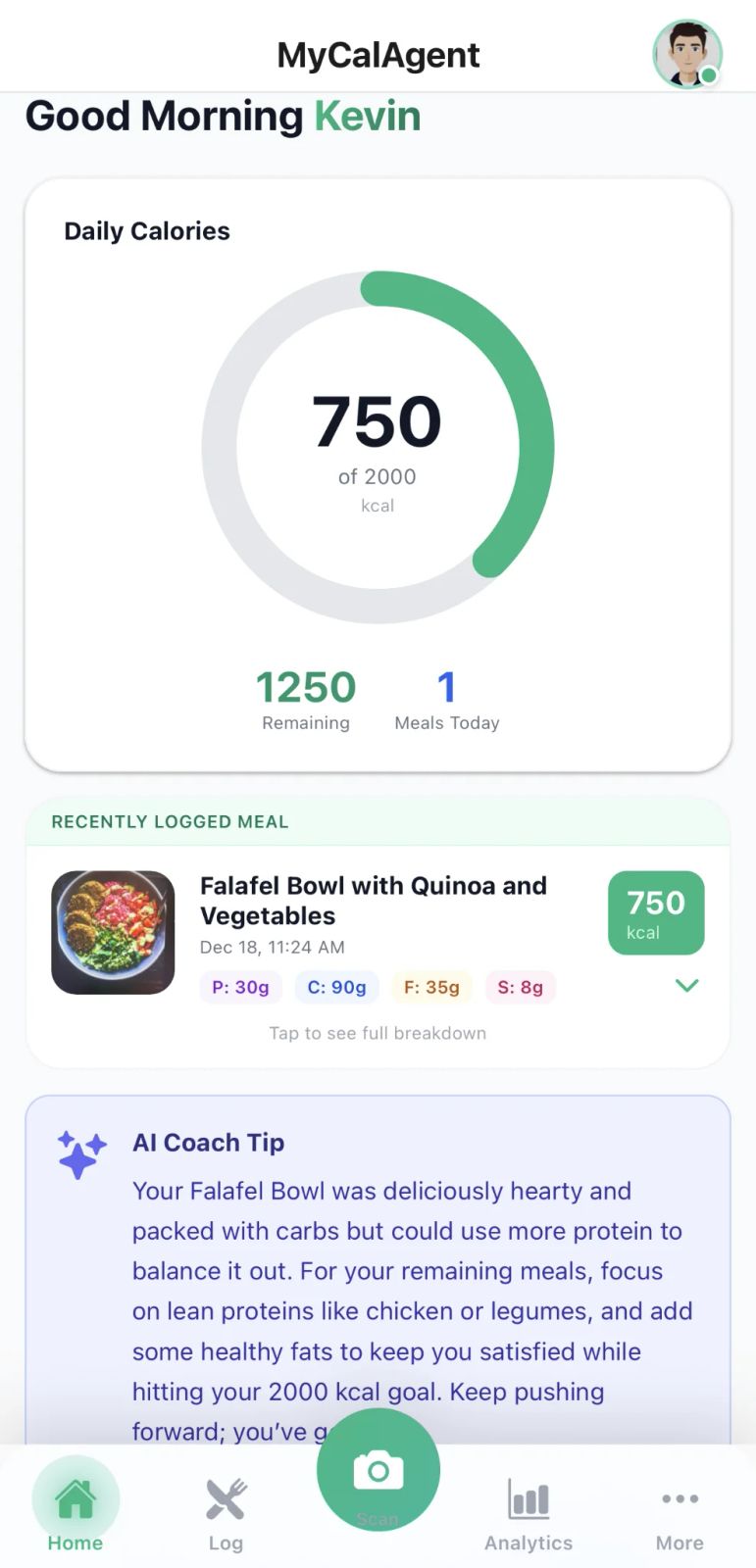
MyCalAgent can help organize the everyday context a person chooses to log: approximate meal-photo estimates, nutrition details, hydration, caffeine, alcohol, fasting, and wellness notes. The useful part is not a single “perfect” score. It is having a record that is easy to revisit, correct, and read with context.
A correction is valuable information. So is an omitted log. A weekend that looks different from a workday can be useful context rather than an error to erase. Wellness data works best when it supports reflection without asking anyone to perform completeness.
A four-line review before acting on an AI observation
- What was actually logged? Start with the facts, including gaps and estimates.
- What repeats? Look for a pattern across more than one moment.
- What else could matter? Schedule, access, stress, sleep, activity, culture, and personal preferences can all change a day.
- What is the smallest safe next step? Maybe it is logging a little more context, adjusting a routine you already want to try, or asking a professional a better-informed question.
This is not a way to make wellness tracking less ambitious. It is a way to make it more honest. The best AI wellness experiences will be able to help with a first draft of a pattern while preserving the human judgment needed to interpret it.
When an app should not be the next stop
Do not use an AI wellness observation to self-diagnose or manage urgent, complex, or high-stakes health questions. Symptoms, chronic conditions, pregnancy, medications, allergies, eating-disorder concerns, substance-use concerns, or major diet and exercise changes deserve advice from a qualified healthcare professional. Seek urgent help for emergencies.
Wellness and AI disclaimer: This article is for general wellness and informational purposes only. MyCalAgent is not a medical device, healthcare provider, or substitute for medical, dietetic, mental-health, or training advice. AI estimates and observations may be inaccurate or incomplete and do not diagnose, treat, or establish cause and effect. Consult a qualified professional for personal medical or nutrition decisions.
Sources and further reading
Key Takeaway
AI wellness becomes more useful when it can surface a pattern without pretending the pattern is an answer.
What This Means For MyCalAgent Users
MyCalAgent's AI pattern recognition analyzes your logged data across meals, hydration, sleep, and habits. After 7–14 days of consistent tracking, it surfaces the recurring patterns most relevant to your daily wellbeing.
Frequently Asked Questions
AI wellnessresponsible AIwellness technologyhealth techuncertainty
Disclaimer: This article is for informational purposes only. MyCalAgent does not provide medical advice, diagnosis, or treatment. The content reflects general wellness observations and research summaries. Always consult a qualified healthcare professional before making changes to your diet, health routine, or medical care.
Continue the Conversation
Explore with AI
Compare perspectives across leading AI assistants — ChatGPT, Claude, Google AI, and Perplexity.
Explore with AICompare perspectives across leading AI assistants.
ChatGPTClaudeGoogle AI ModePerplexityOriginal source: World Health Organization; National Institute of Standards and Technology. Content independently reviewed and adapted by MyCalAgent editorial team.