



AI & Wellness4 min read
AI Wellness
A One-Line Check-In Can Make a Meal Log More Human
A short, optional Food & Mood check-in can preserve real-life context around a meal—without turning wellness logging into a scorecard.
MyCalAgent TeamOctober 23, 20264 min read
Editorially Reviewed by reviewed_byAI-AssistedSource: Health Psychology Review; Nutrients; MyCalAgent
Explore with AICompare perspectives across leading AI assistants.
ChatGPTClaudeGoogle AI ModePerplexityA meal log is good at preserving what happened. A short check-in can preserve what the day felt like around it.
That distinction matters. “Lunch at 1:15” is useful. “Lunch at 1:15; rushed meeting afterward” may be more useful when you return to the week later. It gives a future version of you a little context—without turning the moment into a verdict about your food, your willpower, or your health.
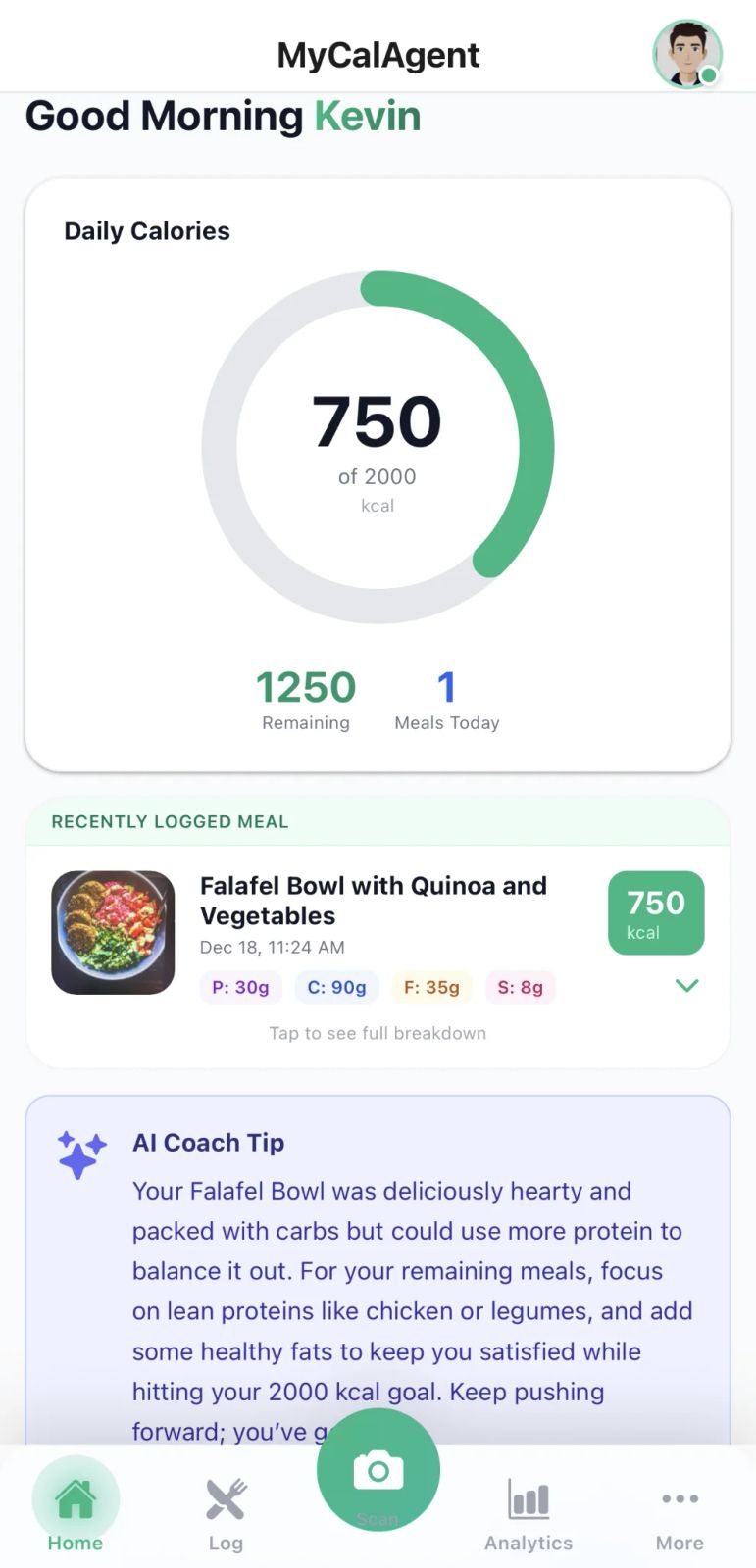
MyCalAgent’s Food & Mood check-ins are designed for that lighter touch. They can sit beside meals, hydration, caffeine, fasting windows, and the routines you choose to log. The aim is not to create a perfect record. It is to give personal reflection a few more anchors.
What happened
A meal, drink, workout, or ordinary part of the day.
What you noticed
A brief, personal observation in words that feel natural to you.
What to revisit
A question for later—not an explanation or a prescription.
Why a little context can be enough
Health-behavior research often includes self-monitoring, but the evidence is not a reason to make logging more intense or more judgmental. A meta-review of behavior-change research found mixed results and substantial variation across studies. A systematic review of technology for recording eating behavior also notes the limits of self-reported recall and the need for better real-world validation.
For everyday wellness, that uncertainty supports a practical rule: collect only the detail that helps you remember and reflect. A one-line check-in may be more sustainable than a long questionnaire, especially when life is busy. Some days a meal photo is enough. Some days, no log is the right choice.
Three useful check-ins that do not grade your day
- Context: “Ate between errands,” “late meeting,” or “travel day.”
- Experience: “Still hungry,” “felt settled,” or “low energy this afternoon.”
- Question: “Worth noticing next week?”
These are observations, not diagnoses. “Low energy” has many possible influences, including sleep, stress, activity, illness, medications, and everyday variation. The value of a note is that it keeps the question open instead of forcing a single answer.
| A scorecard mindset | A context-first check-in | What it preserves |
|---|---|---|
| “I ate badly.” | “Ate quickly after a long commute.” | A real-world condition without shame |
| “Perfect day.” | “Meal plan felt easier today.” | A specific observation to revisit |
| “This meal caused it.” | “Noticed an afternoon dip; curious about the bigger pattern.” | Uncertainty and room for more evidence |
How AI should show up: as a prompt for review
Across several entries, an AI wellness tool may help organize details you logged and surface an association worth checking. It should not turn an association into a causal claim, interpret a feeling as a condition, or tell you what your body “needs.” MyCalAgent’s role is to support awareness from your own logs, with your review and judgment in the loop.
That also means a missing check-in is not a failed one. Incomplete data may not support an observation; it does not say anything about your commitment or character. A wellness log should fit a life, not become another demand on it.
A calmer way to try it
For a week, add one optional line on days when it feels useful. Keep it descriptive: what was different, what you noticed, or what you would like to remember. At the end of the week, read the notes alongside the rest of your logs. Look for repeat questions rather than trying to find a rule.
If food, body image, tracking, or mood feels distressing or starts to take up too much space, consider pausing and speaking with a qualified healthcare or mental-health professional. Personal logs and AI observations are not a substitute for support or care.
Wellness and AI disclaimer: This article is educational and is not medical advice. MyCalAgent is a wellness awareness product, not a medical device or a substitute for a doctor, registered dietitian, therapist, or other qualified professional. AI outputs can be wrong or incomplete, and repeated associations do not establish cause and effect. For symptoms, medications, pregnancy, chronic conditions, eating-disorder concerns, or other medical questions, consult an appropriate healthcare professional.
Sources
Key Takeaway
A short, optional Food & Mood check-in can preserve real-life context around a meal—without turning wellness logging into a scorecard.
What This Means For MyCalAgent Users
MyCalAgent's AI pattern recognition analyzes your logged data across meals, hydration, sleep, and habits. After 7–14 days of consistent tracking, it surfaces the recurring patterns most relevant to your daily wellbeing.
Frequently Asked Questions
food and moodwellness check-insAI wellnessbehavior changemeal logging
Disclaimer: This article is for informational purposes only. MyCalAgent does not provide medical advice, diagnosis, or treatment. The content reflects general wellness observations and research summaries. Always consult a qualified healthcare professional before making changes to your diet, health routine, or medical care.
Continue the Conversation
Explore with AI
Compare perspectives across leading AI assistants — ChatGPT, Claude, Google AI, and Perplexity.
Explore with AICompare perspectives across leading AI assistants.
ChatGPTClaudeGoogle AI ModePerplexityOriginal source: Health Psychology Review; Nutrients; MyCalAgent. Content independently reviewed and adapted by MyCalAgent editorial team.